Spend less time preparing invoices
Billing in accounting firms is often viewed as a routine administrative operation, even though it is one of the foundations of their business. It reflects the quality of the services provided, determines cash flow and structures an essential part of the client relationship. Yet in many firms, the process remains manual, laborious and prone to error, hampering productivity and creating internal tensions.
In the age of digital transformation, billing automation has become essential. But adopting it is about more than simply saving time: it represents genuine organisational change, a way to professionalise practices, strengthen competitiveness and manage the business more effectively. What does this transition involve? What tangible benefits does it offer, and how can it form part of a sustainable approach to performance?
Manual billing: an underestimated drag on productivity
In many firms, billing still relies on inconsistent processes and lacks flexibility. Staff must juggle spreadsheets, repeated data entry and manual adjustments, whether for time spent or fixed fees. This way of working creates hidden costs: wasted time, errors in amounts or VAT rates, and services that are overlooked and never billed.
It also increases the mental load on teams, who have to monitor deadlines closely and manage client reminders.
Complexity increases in multi-company organisations and on engagements that combine different billing methods, such as disbursements, subscriptions or fixed fees. In this context, automation does more than reduce repetitive tasks; it becomes a strategic means of ensuring data reliability. Suitable solutions automatically incorporate information from time management or client engagement records.
By eliminating human error, they harmonise practices and strengthen the firm’s internal consistency.
Beyond technical considerations, rigorous billing is a genuine asset. Accurate documents sent on time strengthen the firm’s credibility with clients.
Managing and optimising the payment cycle
Billing does not end when a document is issued: it plays a key role in managing cash flow and working capital requirements. When firms delay sending invoices or allow unpaid receivables to accumulate, they weaken their cash position and increase financing costs. Prompt billing, combined with rigorous payment monitoring, helps secure financial flows while complying with the statutory payment periods established by Article L. 441-10 of the French Commercial Code.
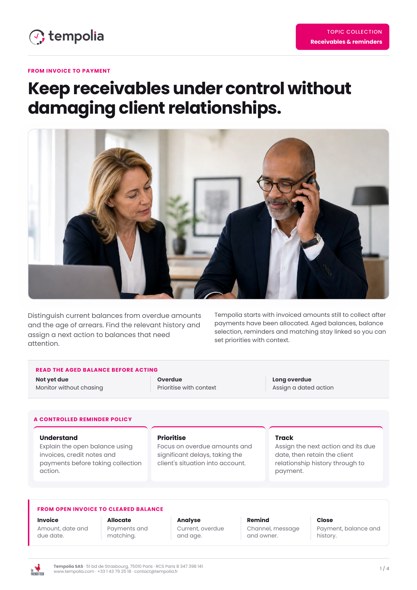
Billing automation enables invoices to be issued as soon as services have been delivered, accelerating the processing cycle. Modern solutions include comprehensive features such as automatic reminders and aged receivables, providing a clear, up-to-date view of outstanding amounts. These tools help firms prioritise debt collection actions and reduce payment times, thereby improving cash flow.
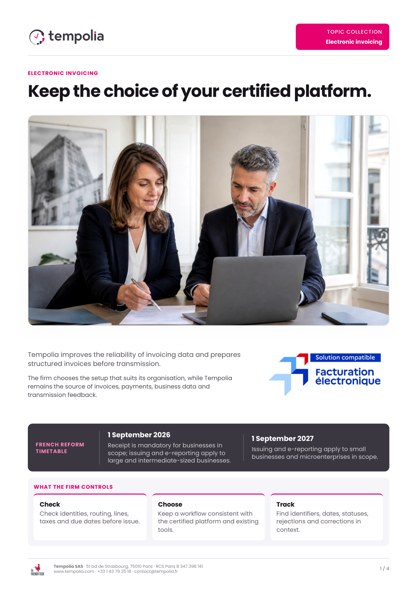
At the same time, digitalisation improves the traceability of exchanges and makes payment matching easier, which has become important with the electronic invoicing reform. By centralising information and automating invoice statuses, firms reduce tax errors and manage client accounts more reliably.
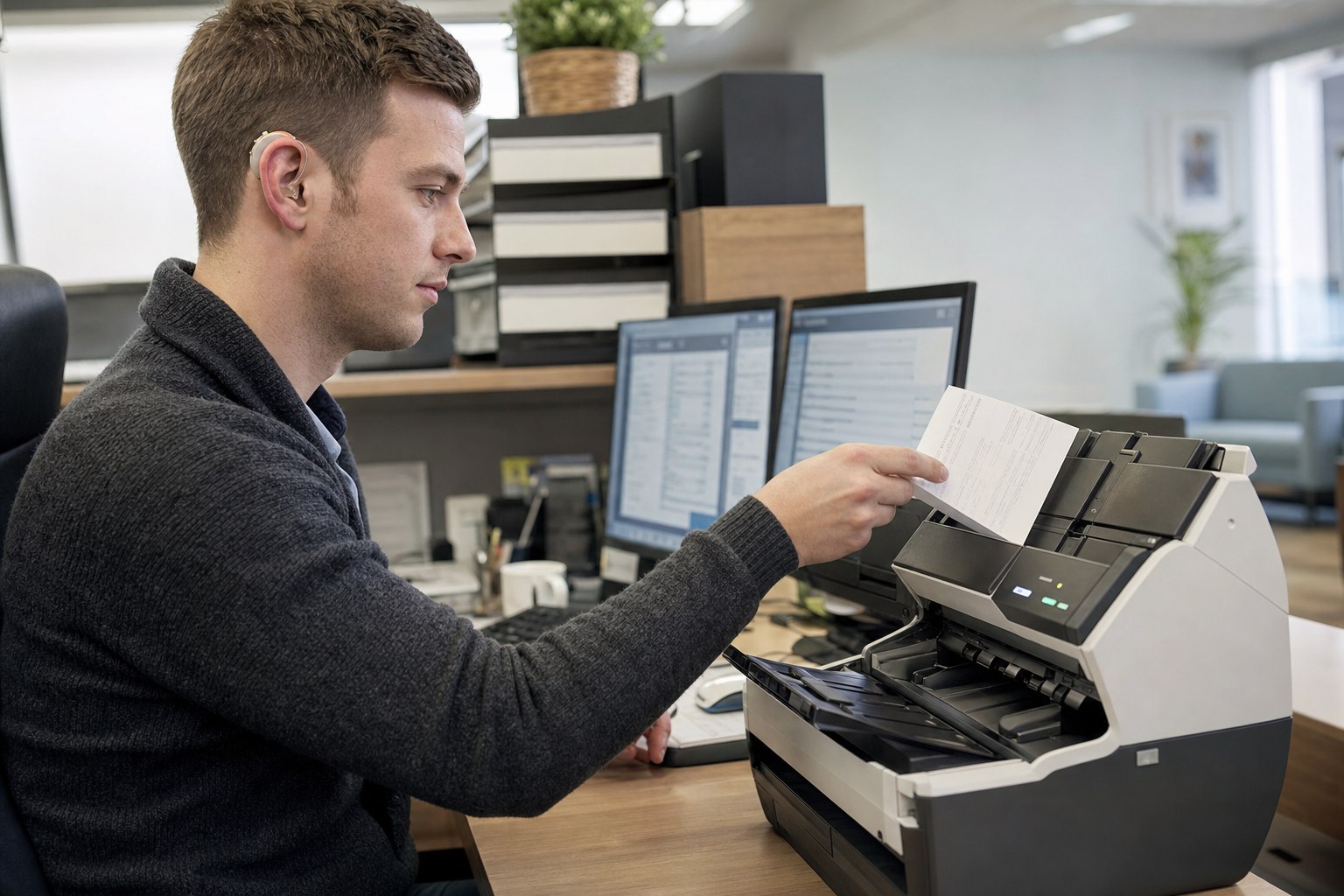
This modernisation also reduces printing and archiving costs while securing payments and lowering the risk of bad debt.
Tempolia: an independent, mature internal management solution
As part of their digital transformation, accounting firms seek solutions that meet their specific requirements while integrating with existing processes. Tempolia stands out through its comprehensive, flexible approach, developed in collaboration with accountancy professionals to address the profession’s requirements.
Billing automation is one of Tempolia’s key strengths. Whether services are billed at a fixed fee, according to actual time or as subscriptions, the software generates invoices in just a few clicks. Tempolia also includes budgeting features that plan future billing and protect the firm’s cash flow.
Digitalisation is central to Tempolia’s approach. Invoices can be exported as PDFs, sent directly by email or integrated into document management or accounting systems. Compatibility with platforms such as future PDPs and with the Factur-X format meets electronic invoicing requirements while accelerating the processing cycle.
One of Tempolia’s strengths is its payment management. Features include automatic generation of SEPA direct debit files, payment monitoring through automatic retrieval of payment information and personalised reminders. These reminders take outstanding balances and due dates into account, optimising debt collection while reducing the administrative burden on staff.
The software goes beyond billing to provide genuine engagement profitability analysis. Pivot tables and margin analysis tools help firms manage their performance more effectively and identify variances that require adjustment.
Designed for access through a web browser on a computer, smartphone or tablet, Tempolia is flexible and intuitive. Its modern interface and extensive features make it a mature, reliable tool capable of supporting firms as they optimise their internal processes.

See also: improving reminders with aged receivables and choosing a billing method.