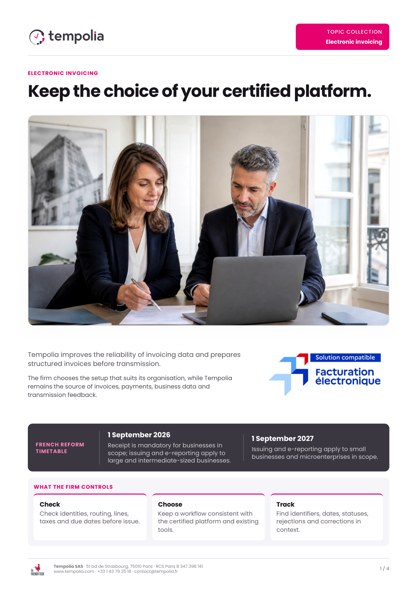
As bookkeeping tasks become increasingly automated, France’s electronic invoicing reform marks a turning point for accounting firms. This structural change, which will apply to every business in the months ahead, frees up a considerable amount of staff time.
This newly available time must not remain invisible or become diluted: it creates a genuine opportunity to refocus teams on higher-value work, particularly advisory, management and support engagements.
The challenge is to measure the time recovered and turn it into a tangible driver of transformation.
Electronic invoicing: the catalyst for a new organisational cycle
From 2026, receiving and issuing electronic invoices through certified platforms will become mandatory. For firms, this means simpler workflows, fewer repetitive tasks and less manual intervention. Accounting documents can be processed more smoothly and reliably, which automatically frees up staff time.
But these time savings can only be used effectively if they are quantified. Firms all too often underestimate the benefits of automation because they lack precise before-and-after data.

Tempolia: the tool that makes productivity gains visible
This is precisely where Tempolia comes in. Designed for accounting firms, the solution provides detailed monitoring of time by engagement, client and staff member. Using clear indicators, firms can identify the concrete effects of digitalisation on their organisation.
Its modules—time management, activity monitoring, planning and billing—provide a precise view of changes in workloads and margins. Automation becomes measurable and, therefore, manageable.
Creating value from new engagements through structured monitoring
As less time is spent on data entry and client reminders, new engagements naturally emerge: dashboards, management advisory services, support for digital transformation and more. Tempolia makes it easy to incorporate them into the firm’s organisation.
With an analytical view by engagement, partners can adapt engagement letters, revise packages and adjust prices to reflect the value actually delivered. This rigorous monitoring also informs HR strategy, including task allocation, skills development and targeted training.
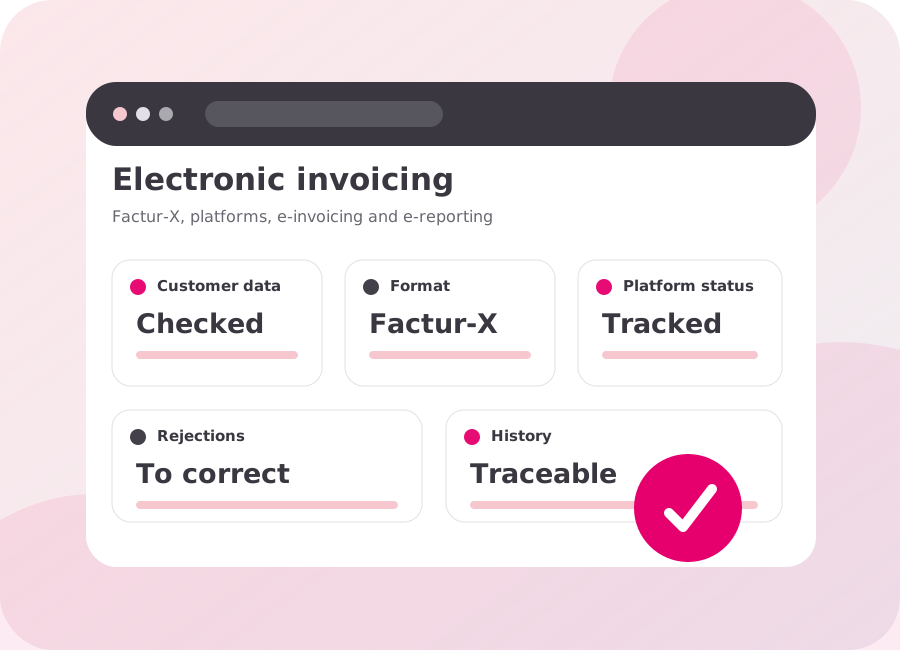
A driver of attractiveness and profitability for accounting firms
Electronic invoicing reform is more than a technical constraint. It is an opportunity to rethink accounting firms’ business model. By adopting a tool such as Tempolia now, firms professionalise their internal management, make their profitability indicators more reliable and become more attractive to both staff and clients.
Firms that turn this regulatory change into a continuous improvement project will gain a head start.
Equip your firm now to manage the transformation
Freed-up time only delivers value if it is measured, put to good use and reinvested strategically. Tempolia gives chartered accountants and their staff the tools they need to manage this transition, engagement by engagement and client by client.
By equipping themselves today, firms can turn electronic invoicing from a challenge into a lasting driver of transformation.
See also: exploring the electronic invoicing reform and automating billing in an accounting firm.