Tax season is an exceptionally intense period for your accounting firm. Between finalising annual accounts and preparing numerous tax returns to strict deadlines, teams face considerable pressure. Rigorous advance planning makes it possible to manage this period calmly while maintaining service quality and protecting staff wellbeing.
The objective is to distribute workloads effectively in advance, identify priorities and remain flexible when unexpected events occur. Good organisation is the key to preventing overload and stress as deadlines approach.
The importance of planning ahead
Good planning requires a clear view of the tasks to be completed, taking team skills and availability into account. It is organised around several stages:
1. Prioritise tasks
Not all engagements are equally urgent. Some tax obligations require immediate attention, while others can be spread over several weeks. Establishing this order of priority is a reliable way to prevent bottlenecks during particularly busy periods.
2. Distribute workloads fairly
An imbalance in task allocation can undermine the firm’s overall effectiveness. If some staff are overwhelmed while others have a more normal workload, the quality of work can suffer and unnecessary stress can arise. Balanced distribution maintains consistent productivity and protects team wellbeing.
3. Anticipate the unexpected
Even with precise planning, unexpected events remain inevitable: delays in clients providing documents, new legal obligations or unforeseen emergencies.
A flexible organisation must be able to adapt quickly to these issues so that they do not disrupt the overall progress of engagements.
4. Stay in touch with your clients
Managing client relationships during exceptionally busy periods consumes resources. But it helps identify omissions and problems quickly, which has a positive impact on client satisfaction and builds loyalty. One of the main factors influencing a client’s choice of firm is how they perceive the quality with which tax season is managed.

A successful, low-stress tax season
Successfully navigating tax season requires a structured approach that is followed consistently while remaining flexible. Planning should rest on three pillars:
- Identify priorities: which returns are most urgent? Which clients have specific requirements or tighter deadlines?
- Distribute engagements evenly: each staff member should have a workload proportionate to their skills and availability.
- Anticipate the unexpected: even the best plan must be able to accommodate delays or unforeseen requests without creating an unmanageable workload.
For this strategy to be fully effective, a real-time view of progress across all tasks is essential. This is where a suitable management tool can play a decisive role.
How can software support this organisation?
To simplify planning and optimise the management of tax work, tools such as Tempolia provide a comprehensive set of features for these requirements.
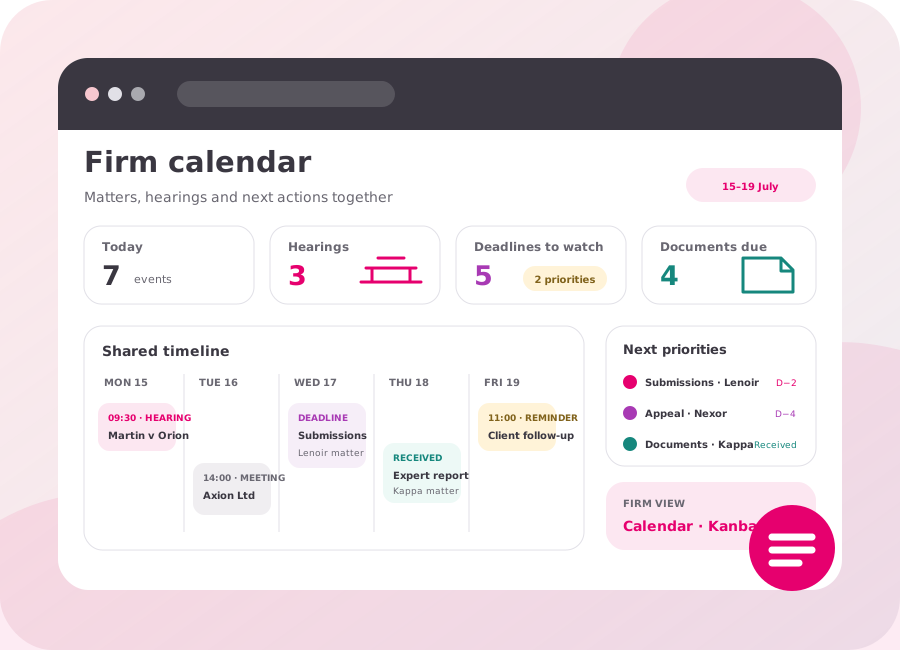
Tempolia helps structure schedules by ranking each tax obligation according to its urgency and due date. The software includes automatic reminders that can be configured for each deadline and provides a clear view of engagement progress through a Kanban board.
The Kanban board tracks work in progress in real time, grouped by its stage of completion. This simplified view helps teams reprioritise when unexpected events occur and reassign engagements according to staff skills and availability. It ensures that workloads are distributed smoothly while deadlines are met.
In addition to monitoring tax obligations, Tempolia makes client engagement management easier with specific reminders for tasks to be completed by their due dates. This system provides precise monitoring and helps anticipate potential delays, contributing to efficient, low-stress management.
Approaching tax season with confidence
With advance planning and the right tool, tax season can become a well-controlled stage, free from the usual overload and stress. Tempolia not only structures schedules and monitors deadlines, but also adapts priorities quickly in response to unexpected events.
By establishing this kind of organisation, your firm can handle peaks in activity with confidence and improve its efficiency throughout the year.
Compare planned workloads with available hours
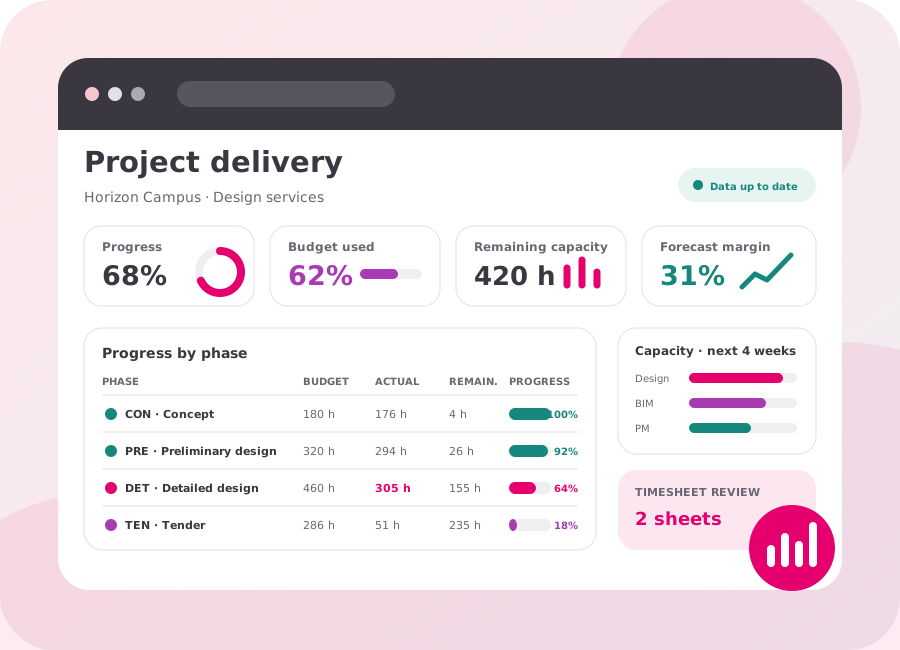
By week or month, compare available capacity, recurring work, deadline-driven work and a contingency reserve. Worked monthly example: four staff members each have 140 productive hours, giving 560 hours. Recurring engagements require 340 hours and the tax-season peak another 310 hours, creating a forecast shortfall of 90 hours before contingencies.
| Item | Hours | Decision |
|---|---|---|
| Productive capacity | 560 | Check leave, training and internal time |
| Recurring workload | 340 | Maintain mandatory commitments |
| Tax-season peak | 310 | Review engagements, milestones and skill levels |
| Variance | −90 | Resolve before the period begins |
Resolve the variance in this order: improve work-to-complete estimates, move flexible work with client agreement, reassign by skill, reduce non-priority internal work, then decide on additional resources or subcontracting. Do not cover a structural deficit with a general assumption of overtime.
Each week, monitor capacity coverage, overdue unplanned hours, engagements without an owner, stale work-to-complete estimates and planned-versus-actual workload. Record the date, author and reason for every material decision.
See also: managing time during the tax cycle and making time entry more reliable.