In accounting firms, time management is not merely an administrative exercise but a fundamental component of profitability. Precise, continuous recording of working time for each engagement helps optimise the use of human resources and improves cost control. The process therefore becomes a strategic tool for ensuring the firm’s sustainability and competitiveness.
The challenges of time management in an accounting firm
Preparing a capacity plan that schedules each person’s work in advance is a valuable complement to regular time entry. It is an investment that makes it possible to anticipate workloads, manage resources more effectively and, most importantly, adjust actions in real time where necessary.
A common challenge nevertheless arises when staff knowingly or unknowingly alter the hours recorded, particularly if they are aware of the capacity plan that applies to them. Some may overstate their involvement to emphasise their contribution, while others understate their actual hours to conceal a delay. These small distortions skew the overall picture and make rapid, effective decision-making more difficult.
Rigorous, transparent time management is essential not only for internal control but also for maintaining a relationship of trust with clients. Clients are better able to understand out-of-scope services or fee adjustments when they are supported by a clear audit trail of recorded time.

Profitability and recovery analysis: the importance of real time
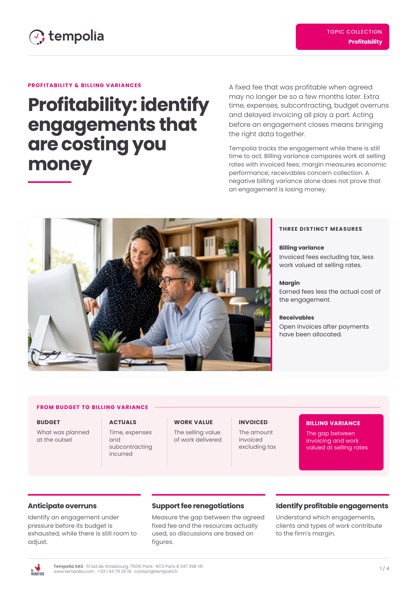
Over- and under-recovery analysis is an essential indicator for monitoring engagement profitability in an accounting firm. It compares billed amounts with the theoretical value of time and expenses incurred, complementing margin analysis, which compares billed amounts with cost.
Waiting until an engagement ends before performing this analysis is risky. Variances identified after the event leave little room to correct the position, and profitability can suffer.
By contrast, incorporating real-time time management turns the analysis into a genuine strategic tool. Continuous monitoring of time makes it possible to adjust resources as soon as a variance appears. Teams can be reorganised, forecasts refined and, where necessary, financial terms renegotiated with the client.
This management approach keeps costs under control throughout the engagement while enabling the firm to respond commercially without delay if the work proves more expensive than expected.
Better human resource management
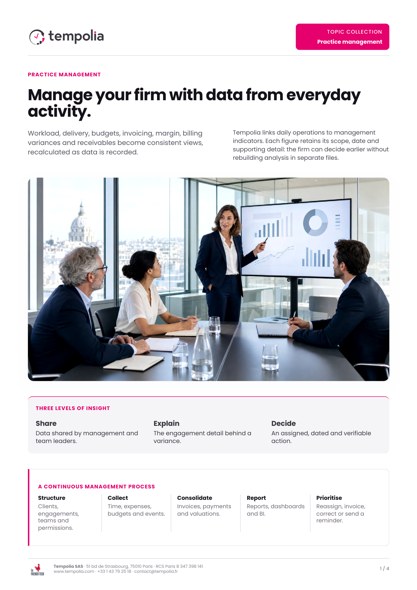
Beyond engagement profitability, time management plays an essential role in distributing workloads across the firm. With detailed visibility of each staff member’s activity, managers can balance schedules according to individual skills and availability and anticipate recruitment needs. This prevents some staff from becoming overloaded while others remain underused.
Regular monitoring also improves quality of working life, a key factor in the firm’s overall productivity. By quickly identifying the risk of overload or burnout, managers can reorganise teams or adjust priorities, supporting staff wellbeing and, in turn, the delivery of high-quality services to clients.
Using Tempolia for effective time management
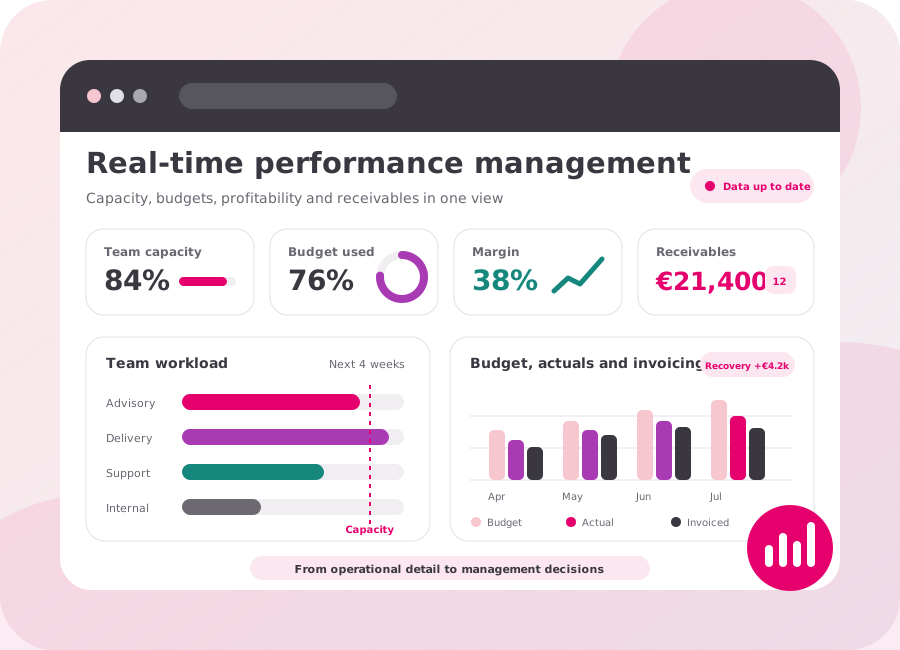
To realise all these benefits, dedicated software such as Tempolia is a genuine advantage. Its simple, intuitive interface makes time entry straightforward while giving managers a real-time overview of engagements.
The tool also automates recovery analysis and provides precise reports for identifying variances and making decisions quickly. By centralising all this information in a single solution, Tempolia helps improve profitability while reducing the administrative burden.
In other words, with Tempolia, time management is no longer a headache but a genuine asset for firms seeking to optimise profitability and deliver a better service to their clients.
See also: calculating engagement profitability and making time entry more reliable.