Connect the fee set by the engagement agreement with work performed, time, expenses, disbursements and payments on account. Weekly or monthly, compare actual cost and work to complete with expected fees. Trigger a review as soon as a time, cost or scope threshold is crossed.

Turn the fixed fee into a manageable budget
Break the fee into phases or work categories: initial analysis, documents, correspondence, hearing, negotiation or closure. Give each group an internal time or cost budget without turning the client agreement into a promise of hours. The internal objective is to identify drift, not to replace the agreed fee rule.
Track payments on account, fees, expenses and disbursements separately
A payment on account received is not margin: it is an amount to allocate under the relevant treatment. Firm expenses, client disbursements, scale costs and fees need to remain distinguishable. This separation supports a detailed client statement and avoids treating positive cash flow as proof of profitability.
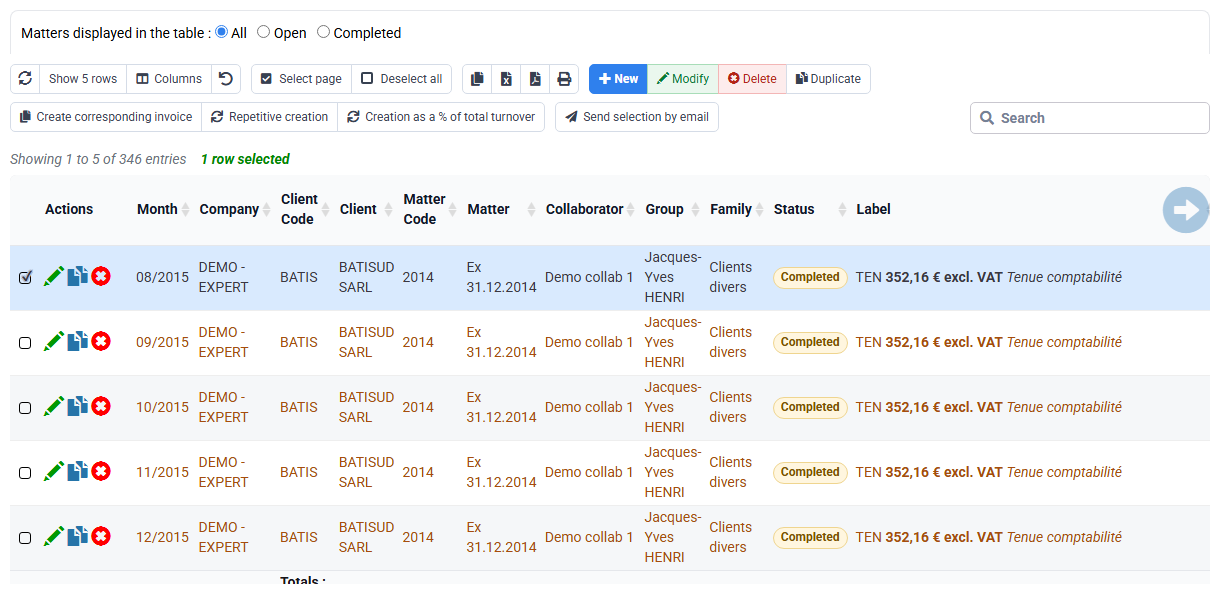
Calculate a forecast margin
| Item | Amount |
|---|---|
| Expected fixed fee | €9,000 |
| Cost of actual time | €4,100 |
| Non-recharged expenses | €300 |
| Estimated cost to complete | €2,400 |
| Forecast margin | €2,200 |
| Forecast gross margin percentage | 24.4% |
The calculation is €9,000 − €4,100 − €300 − €2,400 = €2,200. If a new hearing increases cost to complete to €4,000, margin falls to €600. That is the point to review scope, delivery or the terms available under the engagement agreement.
Realisation variance = fees billed excluding tax − selling value of work performed (hours × planned selling rate). A positive result is over-recovery; a negative result is under-recovery.
Margin = fees excluding tax − cost of time − non-recharged direct costs. For a forecast margin, include the estimated cost to complete in costs.
Key point: a zero realisation variance means fees were billed in accordance with the theoretical hourly rate; margin checks whether the overall fee structure is correctly calibrated against costs.
Define alerts that lead to action
- 70% of the time budget used while the phase is incomplete.
- Work to complete not updated for over 30 days on an active matter.
- Out-of-scope work waiting for assessment.
- Insufficient payment on account for the next stage under firm policy.
- Material time missing or entered too late to explain.
Preserve client transparency
Internal management is not intended to produce automatic bills without professional review. It helps lawyers keep clients informed of expected fees, expenses and disbursements and produce a coherent statement. For French firms, the National Internal Regulations published by the CNB are the professional primary source to consult; the signed agreement and rules applying to each matter remain decisive.
See also: Tempolia for lawyers, billing, profitability calculation and the operational FAQ.